
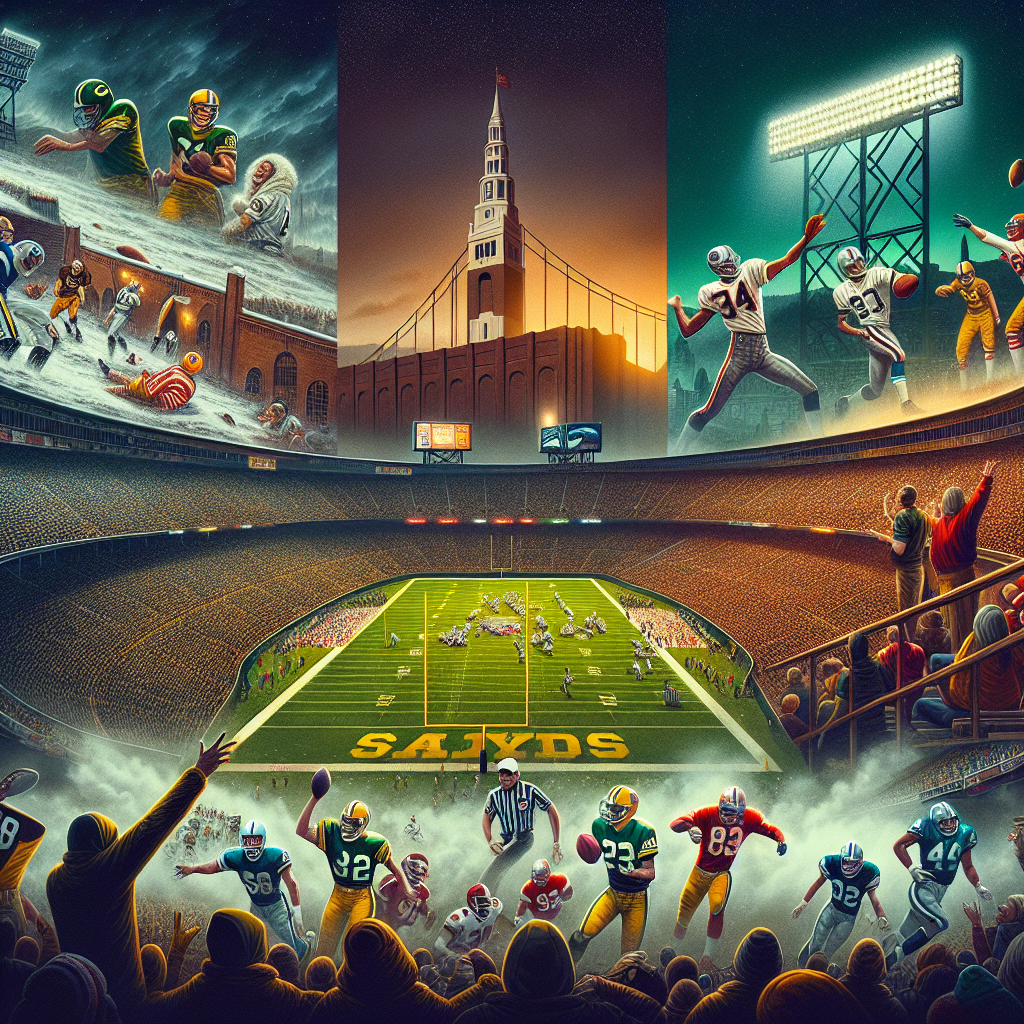
From Lambeau to the ‘Stick: A Nostalgic Journey Through Iconic NFL Stadiums
The roar of the crowd, the smell of hot dogs, the chill of the autumn air – these are the sensory hallmarks of the NFL experience. But beyond the game itself, the stadiums where these battles unfold hold a special place in the hearts of fans. They are more than just concrete and steel; they are hallowed grounds where legends are made and memories are etched in time. Let’s embark on a nostalgic journey, comparing the enduring legacy of Lambeau Field with the bygone era of Candlestick Park, two iconic venues that represent different eras of NFL history.
Lambeau Field: The Frozen Tundra’s Enduring Legacy
Nestled in Green Bay, Wisconsin, Lambeau Field stands as a testament to tradition and unwavering fan loyalty. Opened in 1957, it’s the oldest continually operating NFL stadium, affectionately known as the “Frozen Tundra.” Its history is intertwined with the Green Bay Packers’ storied franchise, a team that embodies small-town charm with big-time success.
Lambeau Field wasn’t always called Lambeau Field. Originally named “City Stadium,” it was renamed in 1965 to honor Earl “Curly” Lambeau, the Packers’ founder, player, and long-time coach. This tribute cemented the stadium’s place in NFL lore, forever linking it to one of the game’s most influential figures.
The stadium has witnessed countless historic moments, from the Ice Bowl in 1967, where the temperature dipped to a bone-chilling -13 degrees, to the Lambeau Leap, a spontaneous touchdown celebration invented in 1993 by safety LeRoy Butler. These events have contributed to the stadium’s mystique, making it a pilgrimage site for football fans.
Lambeau Field’s significance extends beyond the gridiron. It’s a symbol of community pride, where generations of fans have gathered to cheer on their beloved Packers. The stadium has been sold out every season since 1960, and the waiting list for season tickets is legendary, a testament to the unwavering devotion of the “Cheeseheads.”
While modern stadiums boast luxury suites and high-tech amenities, Lambeau Field retains a classic, no-frills atmosphere. Its green-painted steel and simple design evoke a sense of nostalgia, reminding fans of the game’s humble beginnings. The stadium has undergone several renovations over the years, including the addition of luxury suites and updated scoreboards, but it has managed to preserve its original character.
Candlestick Park: Farewell to the ‘Stick
In stark contrast to Lambeau Field’s timeless appeal, Candlestick Park in San Francisco represents a bygone era of multi-purpose stadiums. Originally built for baseball, it became the home of the San Francisco 49ers in 1971 and served as their home for over four decades.
Candlestick Park was known for its challenging weather conditions. Perched on the edge of San Francisco Bay, the stadium was notorious for its swirling winds, dense fog, and frigid temperatures. These elements earned it the nickname “The ‘Stick” and created a unique, often unpleasant, experience for players and fans alike.
Despite its drawbacks, Candlestick Park was the site of many memorable moments in 49ers history. It was where Dwight Clark made “The Catch” in the 1981 NFC Championship game, a play that propelled the 49ers to their first Super Bowl victory and cemented Joe Montana’s legacy. The stadium also hosted eight NFC Championship games, witnessing the rise of a dynasty led by Montana, Jerry Rice, and Steve Young.
Candlestick Park wasn’t just a football venue; it was a cultural landmark. The Beatles played their final concert there in 1966, and Pope John Paul II held mass at the stadium in 1987. These events added to the stadium’s rich history, making it a gathering place for diverse communities.
However, Candlestick Park’s age and outdated facilities eventually led to its demise. The 49ers moved to Levi’s Stadium in Santa Clara in 2014, and Candlestick Park was demolished in 2015. While the stadium is gone, its memories live on in the hearts of 49ers fans.
A Tale of Two Stadiums: Tradition vs. Modernity
Lambeau Field and Candlestick Park represent two distinct approaches to stadium design and fan experience. Lambeau Field embraces tradition, offering a classic, community-oriented atmosphere. Candlestick Park, while flawed, was a versatile venue that hosted a variety of events and created lasting memories.
Today, NFL stadiums are increasingly focused on luxury and technology. AT&T Stadium in Arlington, Texas, is a prime example, boasting a retractable roof, a massive high-definition video screen, and a wide array of premium amenities. SoFi Stadium in Los Angeles takes the fan experience to another level.
While these modern stadiums offer unparalleled comfort and entertainment, they often lack the history and character of older venues like Lambeau Field. The “Frozen Tundra” stands as a reminder that the heart of the NFL lies not in luxury suites or fancy technology, but in the shared passion of fans and the enduring legacy of the game.
As the NFL continues to evolve, it’s important to remember the iconic stadiums that have shaped its history. From the frozen tundra of Lambeau Field to the swirling winds of Candlestick Park, these venues have provided the backdrop for countless unforgettable moments, connecting generations of fans and solidifying the NFL’s place in American culture.