
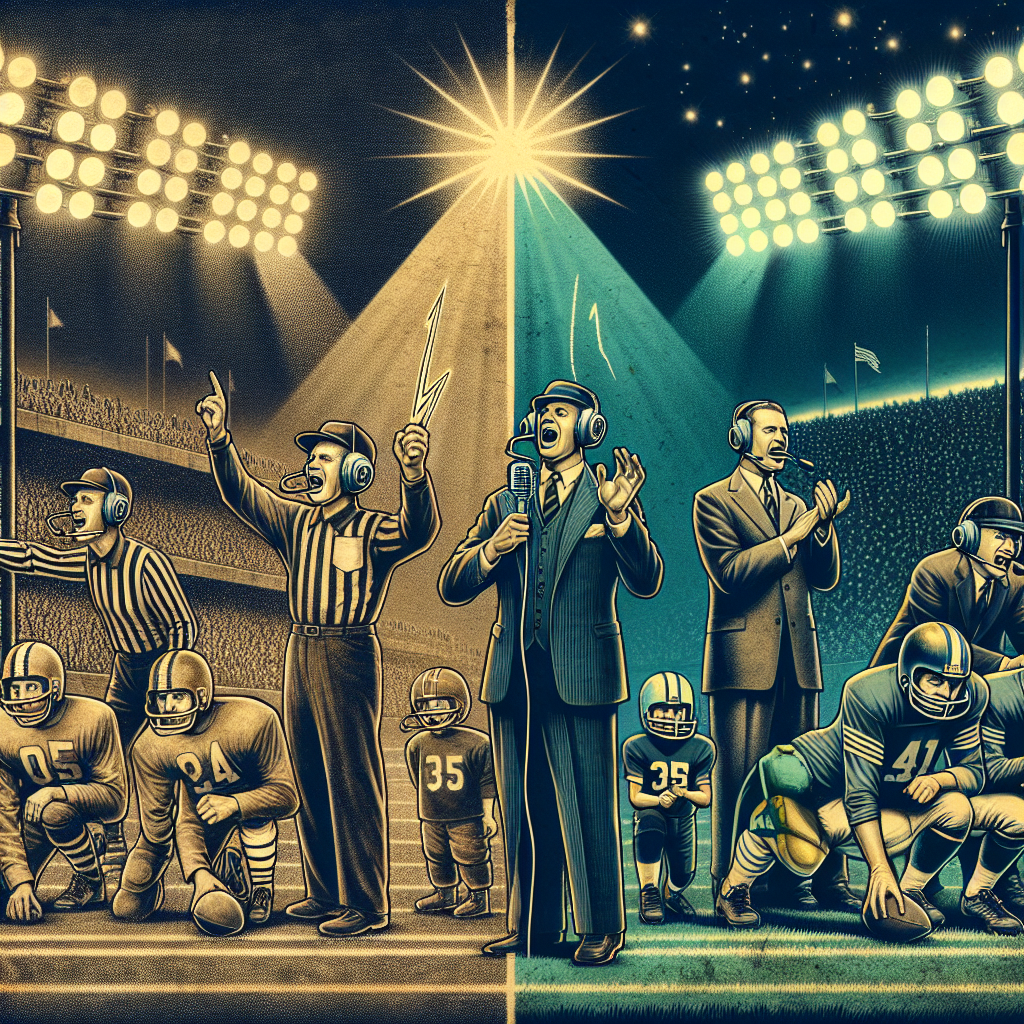
From Hand Signals to Headsets: The Evolution of NFL Play Calling Communication
The roar of the crowd, the tension in the air – it’s game day in the NFL. But beyond the spectacle, a silent revolution has been transforming how teams strategize and execute plays. Forget the image of a lone quarterback deciphering frantic sideline gestures. Today, sophisticated technology connects coaches and players, enabling real-time adjustments and strategic precision. This is the evolution of NFL play calling communication, a journey from basic hand signals to advanced headset technology.
The Early Days: A Language of Gestures
Before the advent of modern technology, NFL teams relied on rudimentary methods to communicate plays. Quarterbacks often had to read lips or interpret a flurry of hand signals from the sidelines. This system was not only prone to misinterpretation but also incredibly slow, especially in the face of a rapidly ticking play clock. According to NFL historians, in the early days of football, officials would shout to communicate with players and fans, but as the game grew in popularity, hand signals were adopted to improve communication. Some coaches would even send in substitutions before every snap to relay play calls to the quarterback.
The Cleveland Browns’ Bold Experiment
In 1956, Paul Brown, the innovative coach of the Cleveland Browns, sought a competitive edge. He experimented with an in-helmet radio receiver to communicate directly with his quarterback. While groundbreaking, the technology was imperfect, occasionally picking up taxi radio signals. Despite its potential, the NFL quickly banned the technology, deeming it an unfair advantage. However, Brown’s vision foreshadowed the future of NFL play calling.
The Dawn of the Headset Era
It wasn’t until 1994 that the NFL officially approved the use of electronic play calling technology. This decision aimed to speed up the game and reduce delays for television viewers. The new system was estimated to save between eight and fifteen seconds per play. Initially, only the quarterback had a receiver in his helmet. In 2008, the league expanded the system to allow a designated defensive player to receive communication from the coach, ensuring fairness and strategic parity. According to Buffalo head coach Dick Jauron, the communication was a lot smoother because you didn’t have to signal.
The Tech Revolution: Enhancing Clarity and Security
The NFL’s commitment to innovation didn’t stop there. Over the years, the league has continuously refined and improved coach-to-player communication systems. In 2012, headset signals switched from analog to digital, reducing interference and significantly improving sound quality. Messages could now be scrambled, preventing other teams from eavesdropping on play calls.
Sony’s Game-Changing Headsets for 2025
The 2025 season marks a new chapter in NFL sideline communication with the debut of Sony’s custom-developed coach’s headsets. These headsets, built from scratch with input from NFL coaching staff, incorporate advanced audio technology derived from Sony’s acclaimed 1000X headphone series. According to Neal Manowitz, president and chief operating officer of Sony Electronics Inc., the headsets accommodate the unique demands of the sport.
These state-of-the-art headsets boast several key features:
- Superior Noise Cancellation: Engineered to combat the deafening roar of NFL stadiums, the headsets utilize noise-canceling algorithms trained with real crowd noise exceeding 100 decibels.
- Crystal-Clear Communication: A custom-built microphone isolates and elevates the coach’s voice, ensuring consistent and clear communication on the field.
- Unwavering Reliability: Designed to withstand the physical demands of the sidelines, the headsets are built to handle extreme weather conditions, including rain, sleet, snow, and temperature fluctuations.
- Seamless Integration: The headsets connect to Verizon Business’ Managed Private Wireless Solution through a streamlined belt pack, ensuring stable, real-time communication.
Green Bay Packers Head Coach Matt LaFleur emphasized the importance of clear communication, stating that Sony took the time to understand exactly what coaches need.
Beyond Headsets: A Multi-Faceted Communication Network
While headsets are a crucial component, the modern NFL play calling network extends far beyond. Coaches now have access to a wealth of real-time data and technology, including:
- Microsoft Surface Tablets: Providing high-resolution color images of offensive and defensive formations, allowing coaches to analyze plays and make adjustments on the fly.
- Real-time Data Analytics: Extreme Networks and Verizon provide Wi-Fi solutions and analytics, while Hawk-Eye tracking services enhance the accuracy of game-critical statistics.
- Synchronized Multi-Angle Replay Technology (SMART): From Sony’s Hawk-Eye division, giving officials the ability to watch multiple angles of any incident simultaneously, speeding up the review process.
The Art of Play Calling in the Modern Era
With all this technology at their fingertips, today’s NFL coaches must master the art of play calling. This involves not only crafting the ideal game plan but also adapting to the ever-changing dynamics of the game. As Miami Dolphins coach Mike McDaniel noted, it’s asinine when coaches think they win or lose games based solely on play calls.
Effective play calling requires:
- Understanding Player Strengths and Weaknesses: Tailoring plays to maximize the team’s capabilities.
- Studying Opponent Tendencies: Anticipating the defense’s moves and exploiting their vulnerabilities.
- Maintaining Balance: Mixing run and pass plays to keep the defense guessing.
- Adapting to Game Flow: Adjusting calls based on the score, time, and field position.
The Future of NFL Play Calling
As technology continues to evolve, the future of NFL play calling communication promises even greater precision and strategic depth. AI-powered assistants, advanced optical tracking, and enhanced data analytics will further empower coaches to make informed decisions and optimize their play calling strategies. The game will continue to evolve, but the importance of clear, reliable communication between coaches and players will remain paramount.