
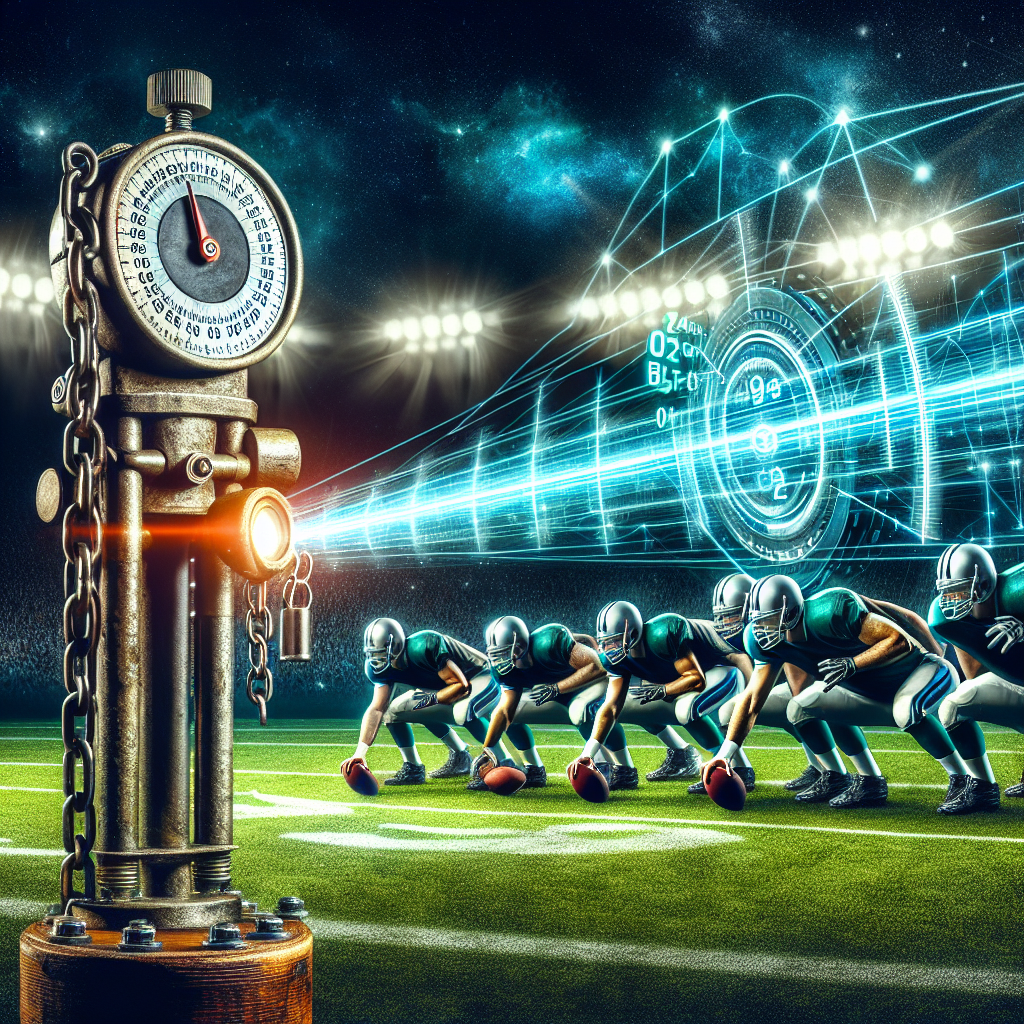
Chain Gang Out, Tech In: Will Hawk-Eye Technology Improve First Down Measurements in the NFL?
The roar of the crowd, the tension in the air, and the agonizing wait as the chain gang trudges onto the field. For decades, this scene has been a familiar part of the NFL experience. But starting in the 2025 season, the game is set to change. The antiquated chain system is making way for cutting-edge technology. The question is: Will Hawk-Eye technology truly revolutionize first down measurements, or will it introduce a new set of challenges?
A History of Close Calls and Controversies
The NFL’s reliance on the chain gang has long been a source of frustration for fans, coaches, and players alike. While NFL referees are typically accurate on 98.9% of calls, the high-stakes nature of the game means that even a fraction of a percentage point can have significant consequences. The subjective nature of spotting the ball and the inherent limitations of a physical chain have led to countless controversies over the years.
Remember the 2017 game between the Dallas Cowboys and the Oakland Raiders? Referee Gene Steratore famously used an index card to determine whether Dak Prescott had gained a crucial first down. While Steratore maintained that the card only confirmed his visual assessment, the image of a paper slip deciding a pivotal moment in a billion-dollar industry perfectly encapsulated the absurdity of the situation.
More recently, during the AFC Championship game between the Buffalo Bills and the Kansas City Chiefs, a controversial spot on a Josh Allen quarterback sneak ignited a firestorm of debate. Replays were inconclusive, and the lack of a clear visual подтверждение fueled accusations of bias. Even Bills coach Sean McDermott voiced his disagreement with the call.
These are just a few examples of how human error and the limitations of the chain system can impact the game. With so much on the line, the NFL has been under increasing pressure to find a more accurate and efficient way to measure first downs.
Enter Hawk-Eye: A Technological Revolution?
The solution, it seems, has arrived in the form of Hawk-Eye technology. Developed by Sony, this system utilizes a network of high-resolution cameras to track the ball’s precise location on the field. Six 8K cameras, operating at 340 frames per second, will be installed in all 30 NFL stadiums, as well as international venues hosting NFL games. These cameras will feed data into a central system, the Art McNally GameDay Central Officiating Center (AMGC) in New York, which will then provide officials with a virtual measurement of the distance between the ball and the first down marker.
According to the NFL, Hawk-Eye promises to be both more accurate and more efficient than the traditional chain system. The league estimates that the new system will take approximately 30 seconds to produce a measurement, saving up to 40 seconds compared to the time it takes to bring out the chains. Troy Vincent, the NFL’s EVP of Football Operations, has expressed optimism about the technology, stating that it will “raise the standards of accuracy, consistency, and efficiency.”
Neal Manowitz, President and COO of Sony Electronics, North America, echoed this sentiment, saying, “We look forward to providing more excitement to passionate fans as we help transform the game in ways that are only possible through the power of creativity and technology.”
How Hawk-Eye Works
The Hawk-Eye system operates through a combination of advanced camera technology and sophisticated algorithms. The 8K cameras capture multiple angles of each play, allowing the system to create a three-dimensional representation of the ball’s trajectory. This data is then processed by computers, which determine the ball’s precise location at the moment the play ends.
When a first down measurement is needed, officials at the AMGC will notify on-field officials of the outcome. Simultaneously, a virtual recreation of the measurement will be displayed in the stadium and broadcast to television viewers, providing fans with a clear visual representation of the call.
The Human Element Remains
While Hawk-Eye promises to improve the accuracy and efficiency of first down measurements, it’s important to note that the technology is not intended to completely replace human officials. As NFL Commissioner Roger Goodell has emphasized, the goal is to “use technology to supplement and to assist and support” officials.
Kimberly Fields, NFL Senior Vice President of Football Operations, has also stressed the importance of the “human element” in determining forward progress. While Hawk-Eye can accurately measure the distance between the ball and the first down marker, it cannot determine where forward progress ends. This decision will still be made by on-field officials.
Furthermore, the chain gang will continue to have a presence on the sidelines, serving as a backup in case the Hawk-Eye system malfunctions.
Potential Challenges and Concerns
Despite the potential benefits of Hawk-Eye technology, some concerns remain. One potential issue is the time it takes to process the data and deliver a measurement. While 30 seconds is faster than the traditional chain system, it could still disrupt the flow of the game.
Another concern is the potential for technical glitches or errors. As with any complex technology, there is always a risk that the Hawk-Eye system could malfunction, leading to inaccurate measurements or delays. The NFL will need to have contingency plans in place to address these issues.
Finally, some traditionalists may lament the loss of the chain gang, which has been a fixture of the game for over a century. While the chain system is far from perfect, it is a familiar and iconic part of the NFL experience.
The Future of Football
The introduction of Hawk-Eye technology marks a significant step forward in the evolution of the NFL. By embracing innovation and leveraging cutting-edge technology, the league is striving to improve the accuracy, efficiency, and fairness of the game.
While challenges and concerns remain, the potential benefits of Hawk-Eye are undeniable. By reducing human error and speeding up the measurement process, this technology has the potential to enhance the viewing experience for fans and ensure that games are decided on the field, not by the limitations of an outdated system.
As the 2025 season approaches, all eyes will be on Hawk-Eye to see if it lives up to the hype. If it does, the chain gang may soon become a distant memory, replaced by a new era of technological precision in the NFL.