
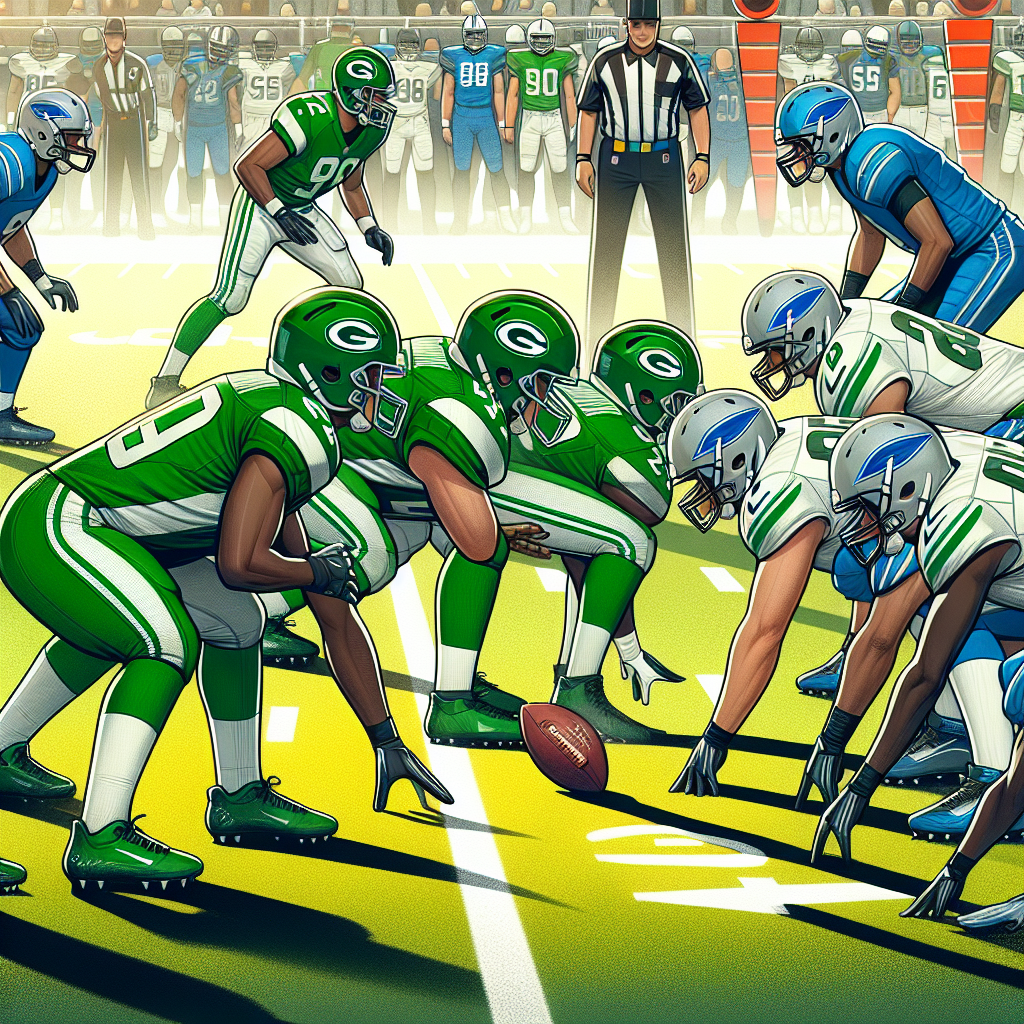
Motion Madness: How Pre-Snap Movement is Giving NFL Offenses a Decisive Edge
The roar of the crowd, the tension in the air, and the chess match unfolding on the gridiron – it’s NFL season. But beyond the brute force and athletic prowess, a subtle revolution is taking place: the rise of pre-snap motion. This isn’t just window dressing; it’s a strategic weapon reshaping offensive play, and it’s giving teams a decisive edge. In Week 10 of the 2024 season, the Los Angeles Rams utilized pre-snap motion a staggering 76.7% of the time, showcasing just how prevalent this tactic has become.
The Art of Deception: Unveiling Defensive Intentions
At its core, “Motion Madness: How Pre-Snap Movement is Giving NFL Offenses a Decisive Edge” is about information. Before the ball is even snapped, offenses are using motion to dissect the defensive alignment, identify coverage schemes, and exploit potential mismatches. As The 33rd Team pointed out, pre-snap motion usage has dramatically increased over the past three NFL seasons, impacting both the running and passing games.
One of the primary benefits of pre-snap motion is its ability to reveal whether a defense is playing man or zone coverage. By sending a receiver in motion, the quarterback can observe how the defense reacts. Does a cornerback follow the receiver across the formation? That’s a telltale sign of man coverage. Does the defense maintain its structure? Zone is likely the call. This information allows the quarterback to make pre-snap adjustments, audibling into a play that is better suited to attack the defensive scheme.
Furthermore, motion can help quarterbacks identify potential blitzes and adjust pass protection accordingly. By observing the movement of linebackers and safeties, the quarterback can anticipate where pressure is likely to come from and redirect the offensive line to provide better protection. According to The 33rd Team, most quarterbacks will redirect the offensive line to where the down safety is to help protect the back in pass protection.
Creating Mismatches and Exploiting Weaknesses
Beyond information gathering, pre-snap motion is a powerful tool for creating mismatches. By shifting players around the formation, offenses can force defenses to adjust, potentially creating favorable matchups in the passing game or opening up running lanes.
For example, motioning a running back out of the backfield and into the slot can create a mismatch against a linebacker. This forces the defense to either cover the running back with a linebacker, which is often a mismatch in favor of the offense, or adjust their coverage, potentially leaving another receiver open.
The San Francisco 49ers, Miami Dolphins, and Kansas City Chiefs have been among the most frequent users of motion in recent years, particularly in the passing game. These teams understand the value of creating uncertainty and forcing defenses to react.
The McVay Effect: Purposeful Motion
Rams head coach Sean McVay, known for his innovative offensive schemes, exemplifies the strategic use of pre-snap motion. As the Rams’ offensive coordinator Mike LaFleur stated, “We like to say ‘we don’t motion just to motion because it looks cool.’ We’re always trying to gather information, whether it’s leverages, whether it’s schematic, whatever (it is).”
The Rams’ increased motion rate, from 41.6% in 2022 to a league-leading 76.7% in 2024, reflects their commitment to using motion as a tool to gain a competitive advantage. This philosophy has paid dividends, as the Rams have seen increased success rates and expected points added (EPA) on plays with motion.
The Evolution of Motion: From Window Dressing to Strategic Imperative
Pre-snap motion is not a new concept in the NFL, but its usage and sophistication have evolved significantly in recent years. What was once a simple tactic to gain a slight advantage has become a complex and integral part of many offensive schemes.
Next Gen Stats are even tracking and classifying different types of pre-snap movements, such as shifts, motions, and motions at the snap, to provide a more granular analysis of their impact. Throughout the season, NGS will unveil advanced motion types like fly, jet, glide, orbit and exit, each providing further granularity to pre-snap analysis.
The rise of pre-snap motion reflects a broader trend in the NFL: the increasing emphasis on pre-snap strategy and the quest for any competitive edge. As defenses become more sophisticated, offenses must continue to evolve and find new ways to gain an advantage.
Motion and the Run Game
While pre-snap motion is often associated with the passing game, it can also be a valuable tool for enhancing the running game. By shifting formations and creating favorable blocking angles, offenses can create running lanes and exploit defensive weaknesses.
For example, motioning a tight end across the formation can force the defense to adjust its front, potentially creating a favorable matchup for the offensive line. If the defense doesn’t shift, the offense can run to the “bubble” of the front, where there are fewer defenders.
The Future of Motion Madness
As the NFL continues to evolve, pre-snap motion is likely to remain a key component of successful offenses. Teams will continue to find new and innovative ways to use motion to gain a competitive advantage, and defenses will be forced to adapt.
The key to effective pre-snap motion is purpose. Teams that simply motion for the sake of motion are unlikely to see significant benefits. However, teams that use motion strategically, to gather information, create mismatches, and exploit weaknesses, will be well-positioned to succeed in today’s NFL.
Motion madness is here to stay, and it’s changing the game one snap at a time.